WINTER DORMANCY
We’re often asked, “Why has my lawn gone brown in winter?” It’s a concern that sometimes leads people to think their lawn has died. But don’t worry – your lawn isn’t dead. It has simply entered its natural winter dormancy.
Let’s explore why your lawn changes colour when winter arrives in our service areas: Sydney, the Illawarra, Shoalhaven, South Coast, Southern Highlands, and the ACT.
What is Winter Dormancy?
As the cooler months arrive, you may notice your lawn losing some of its colour and that you’re mowing less frequently, or not at all. This is completely normal for warm-season grasses.
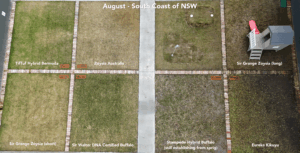
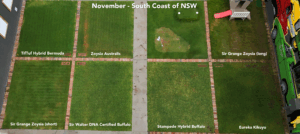
We grow warm-season turf varieties here at Turfco, such as Sir Walter DNA Certified Buffalo, Stampede Hybrid Buffalo, TifTuf Hybrid Bermuda, Sir Grange Zoysia, Zoysia Australis and Eureka Kikuyu.
Most Australian lawns are the same, as warm-season grasses are suited to the hot Australian summers and relatively warm winters. This is the opposite for cool-season grasses, as they love cold weather but will wilt during our summer and require a lot of water to stay green, which quickly becomes very unsustainable.
Warm-season grasses, as the name suggests, thrive in the warmer months of the year. During the cooler months, these grasses slow down and can go into a certain level of dormancy (depending on your region & your turf variety), causing a consistent discolouration over winter.
Winter dormancy is a protection strategy that warm-season grasses use to withstand freezing temperatures and frost. When grass becomes dormant, the grass leaves can become thin and dry out. This helps the grass store its energy in the root system, where the energy is required most. This change in growth normally occurs in warm-season grasses when soil temperatures drop below 14 degrees Celsius. When soil temperatures consistently rise back above this temperature (mid-late spring, depending on your location), your lawn will start to speed up its growth again and return to its natural, lush, green state.
Your lawn’s extent of dormancy and how quickly it exits dormancy can vary not only depending on geographical location, but the type of turf you have.
Our Turf Varieties in Dormancy
- Sir Walter DNA Certified Buffalo will rarely go into full dormancy in coastal regions – it will still go discoloured. Sir Walter DNA Certified Buffalo will go dormant in very cold regions but will recover quickly as temperatures rise. Due to its hardy nature, it can survive frosts.
- TifTuf Hybrid Bermuda greens up earlier in the spring and stays green later in the autumn than other Bermuda grass varieties. It will go into full dormancy in very cold regions, but due to its impressive self-repairing qualities, it can survive frosts.
- Sir Grange Zoysia is more prone to noticeable winter dormancy than other turf varieties and typically takes the longest to green up again. Because it is naturally a slow-growing grass with a slower recovery rate, the onset of winter dormancy further slows its growth. As a result, Sir Grange Zoysia often experiences an extended dormancy period.
- Zoysia Australis can develop a reddish hue as the seasons change. It greens up very quickly after winter. In the Southern Highlands and ACT, it tends to go into a deep dormancy, but it will return to a vibrant green rapidly once temperatures begin to rise.
- Eureka Kikuyu will slow its growth and lose some colour over winter, but it generally retains a lighter green hue better than some other varieties.
In the ACT, the Southern Highlands, and parts of the Far South Coast of NSW—where temperatures drop significantly, and frosts are common—winter dormancy will be more noticeable.
Warm-season grasses in coastal regions, including our delivery areas such as Sydney, the Illawarra, Shoalhaven, and the South Coast, will also naturally show signs of dormancy. During this time, lawns may lose colour and appear patchy or discoloured. However, because these coastal areas generally experience fewer and milder frosts, the effects of dormancy are usually less severe.
What Can You Do for Your Lawn in Winter Dormancy?
As a general rule, we recommend fertilising all our turf varieties before winter using a slow-release granular fertiliser. This type of fertiliser gradually breaks down in the root system over approximately eight weeks, feeding your lawn steadily. Mid-autumn is the ideal time to do this, as fertilising at this stage helps the grass recover from summer stress, strengthens the roots for the colder months, and maintains colour and overall health throughout winter.
Autumn provides perfect conditions for nourishment: the soil remains warm, and the lawn shifts its energy from top growth to root development. This allows it to absorb nutrients efficiently, supporting a smooth transition into winter dormancy and promoting a vigorous start in spring.
Your general maintenance leading up to winter also affects how well your lawn enters dormancy. Regular mowing, proper watering, and adequate care – including fertilising – help ensure the lawn is strong and healthy before the cold sets in. A well-prepared lawn is better equipped to withstand dormancy and will bounce back more vigorously in spring.
Winter dormancy is unavoidable, so it’s best to let your lawn follow its natural cycle. However, there are some practices you can adopt to help your lawn through this period:
- Minimise foot traffic: With slower growth comes slower recovery, so limiting heavy use prevents damage.
- Maximise sunlight: Winter brings less sunlight, so prune back trees and remove debris to allow as much light as possible to reach the lawn.
- Leave blades slightly longer: A longer blade exposes more surface area to sunlight, supporting photosynthesis even during dormancy.
- Water sparingly: Dormant grass needs much less water. Water infrequently and deeply, and avoid watering during freezing conditions to prevent frost damage.
- Avoid major changes: Don’t attempt renovations like overseeding or top-dressing during winter. Focus on maintenance and let the lawn rest until spring.
By following these steps, your lawn will navigate dormancy healthily and be ready for a strong, green comeback when the warmer months return.
Restore Green Instantly with ColourGuard Plus
If you do want to improve the appearance of your lawn, we recommend applying an organic green turf pigment like Colour Guard Plus. This product will give your lawn an instant green colour, keeping a dormant lawn green for up to three months. It will also help limit some of the damage that frost can cause, as well, by keeping the blades up to 2 degrees warmer.
Colour Guard Plus comes in a handy 2L ready-to-use bottle that simply plugs onto your hose. This affordable product will cover up to 150m2, giving your lawn an instant facelift. It also comes in a 100ml Concentrate Bottle, which covers up to 200m2.
TIP: We recommend applying Cologuard Plus in mid to late autumn, before your lawn enters full dormancy. Apply it while the grass is still slightly green. This helps maintain natural pigment and ensures a smoother, more even transition into dormancy.
CAN YOU LAY TURF IN WINTER?
Turf is successfully installed all year round in our region of Southern NSW. With the correct precautions, certain warm-season varieties can also be successfully installed in the Southern Highlands and the ACT regions during winter. Whilst the warmer months (spring & summer) are the ideal time of year to lay a new warm-season lawn, you can successfully lay a new lawn in winter. Laying a new lawn in the cooler months can even offer some benefits.
- Lower water usage. An establishing lawn requires constant watering. In spring and summer, this can be at least 3 times per day for multiple weeks of the establishment period. In winter, you won’t have to irrigate your new lawn as much compared to when in the warmer months because the days are not hot enough to dry out your new turf. Your lawn will still need water (at least 2 water applications per day), but because of the cool air temperatures, water will not evaporate as quickly as it would in summer. You will need to maintain this watering regime until the turf establishes (the roots take firmly to the soil).
Just keep in mind, when laying a new lawn in winter, the lawn will sit idle and not root down properly until the weather warms up and it starts growing again. This means the establishment period for lawns laid during the cooler months of the year is much longer than if you were to lay it in the warmer months.